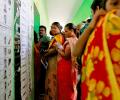
Opposition parties in India, led by the Congress, have demanded a detailed discussion in Parliament on alleged discrepancies in voter lists. Rahul Gandhi raised the issue in the Lok Sabha, highlighting concerns about the integrity of the electoral process. The opposition alleges large-scale duplication of EPIC numbers, which they claim undermines voter integrity and the electoral process. They have also pointed out instances of inflated voter lists in states like Maharashtra and Haryana. The Election Commission has acknowledged discrepancies but maintains that these are not widespread and that corrective measures are being taken. The opposition, however, insists on a comprehensive discussion on the matter to ensure the integrity of elections in India.

A political storm has erupted with the Opposition demanding the removal of Chief Election Commissioner Gyanesh Kumar, following reports that two Election Commissioners raised 'expansive red flags' over the Special Intensive Revision of voters' lists, citing issues like name deletions and decisions made without their knowledge.

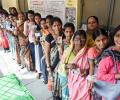
The Election Commission of India has dismissed claims by the Congress party alleging voter list irregularities during the recent Maharashtra assembly elections. In a detailed response, the EC asserted that there were no arbitrary additions or deletions of voters and that the electoral process was conducted with transparency and adherence to rules.

West Bengal Chief Minister Mamata Banerjee has accused the BJP of manipulating voter rolls to divide the state, alleging a conspiracy to deprive Bengali-speaking people of their voting rights. She claims the Election Commission is complicit in deleting lakhs of names from voter lists.
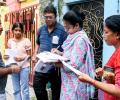
Election Commission data reveals Bhabanipur constituency in West Bengal recorded significantly higher voter deletions compared to Nandigram, sparking political debate ahead of the 2026 Assembly polls.

Election Commissioners Sukhbir Singh Sandhu and Vivek Joshi reportedly flagged multiple issues during the Special Intensive Revision (SIR) of voter rolls, including name deletions. Despite a media report suggesting 14 objections over 10 months, Election Commission officials assert that all decisions, including SIR, were unanimous and approved by all commissioners. The report also highlights opposition parties' criticism of the SIR, alleging it targets non-BJP aligned voters.

Thousands of protesters, including farmers, trade unionists, students, and Left party members, marched towards the Election Commission of India headquarters in Delhi, demanding the resignation of Chief Election Commissioner Gyanesh Kumar and the withdrawal of the ongoing Special Intensive Revision (SIR) of electoral rolls, alleging 'vote chori' and exclusion of eligible citizens.

The Supreme Court is set to hear a plea filed by Congress leader Rahul Gandhi and other opposition figures on Thursday regarding alleged large-scale voter deletions and irregularities in the Special Intensive Revision of electoral rolls. The petition seeks an independent audit of these deletions and modifications, and a direction to prevent further deletions without due process.

The Cockroach Janta Party (CJP) led a large protest in Mumbai, demanding the resignation of Chief Election Commissioner Gyanesh Kumar. CJP leader Abhijeet Dipke announced a further protest at Delhi's Jantar Mantar on October 10 if Kumar does not step down, citing alleged voter deletions and irregularities in recent elections. The protest, which saw participation from various activists and public figures, also called for freezing voter lists and abolishing the 2023 law on Election Commissioner appointments.

Supreme Court Justice Ujjal Bhuyan has unequivocally stated that any process disenfranchising Indian citizens is arbitrary and violates the Constitution.

The Supreme Court declined to hear a public interest litigation (PIL) seeking directions to the Election Commission and state election bodies to address purported duplication and multiple entries in voter lists. The court suggested the petitioner approach high courts with specific grievances and file representations with appropriate authorities.

The Supreme Court has allowed former West Bengal chief minister Mamata Banerjee and others to file fresh applications regarding their claim that victory margins in 31 constituencies in the recent assembly polls were less than the deletion of votes during the Special Intensive Revision (SIR) of electoral rolls.

A new political outfit, the 'Lal Hit Janata Party', has emerged in Delhi, staging a counter-protest against alleged abuse of Prime Minister Narendra Modi and attacks on police.
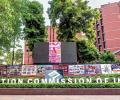
The Bombay High Court's Goa bench has criticised the Election Commission of India (ECI) for rejecting voter registration forms (Form 8s) during a Special Intensive Revision (SIR) process. The court emphasised that the ECI's primary objective is to ensure citizens can cast votes and that rejecting forms, even if incorrectly submitted, goes against this principle. The case arose from a petition by a family whose names were deleted from the voters' list after their Form 8s for address change were rejected.

The Election Commission of India has defended its Special Intensive Revision (SIR) of voters' lists, asserting that differing views among Commissioners are a normal part of deliberations and all orders carry full legal sanction, following reports of two Commissioners red-flagging issues.
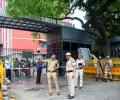
The article details a history of internal disagreements among Election Commissioners in India, highlighting instances from 1993 to the present, including clashes between CECs and commissioners over various issues like removal recommendations, dissent notes, and affidavits, culminating in recent objections regarding voter list revisions.

'Their functioning is flawed, they are not accountable, they are opaque, they are non-transparent, they have lost credibility.'

Three BJP allies, including LJP (Ram Vilas), TDP, and RLM, have called on the Election Commission for a clearer explanation regarding concerns raised by two Election Commissioners over the voter list revision process. Union Minister Chirag Paswan warned that public faith in elections was at stake, while the EC asserted that differing views among its members were normal and final decisions were unanimous.

According to official records, Kishor is enrolled as a voter in West Bengal at 121, Kalighat Road, the address of the Trinamool Congress headquarters in Kolkata's Bhabanipur assembly constituency, which is Chief Minister and TMC chief Mamata Banerjee's seat, he said.

A group of 124 former IAS, IFS, IPS, and allied services officers have issued an open letter defending the Election Commission (EC) and the Special Intensive Revision (SIR) process. They argue that the electoral system cannot be deemed rigged only when a party loses, citing instances where the ruling BJP lost elections under the same EC. The officers highlight the legitimacy and necessity of the SIR for cleaning voter rolls and underscore the robust safeguards within India's electoral system.

Shiv Sena (UBT) chief Uddhav Thackeray accused Chief Election Commissioner Gyanesh Kumar of acting as a 'weapon' for the ruling BJP, while MNS leader Raj Thackeray demanded the cancellation of Maharashtra's Special Intensive Revision (SIR) of electoral rolls, amidst a large protest march in Mumbai.

The draft rolls published on December 16 had already pared down the electorate from 7.66 crore to 7.08 crore, deleting over 58 lakh names on grounds of death, migration, duplication and untraceability.

Shiv Sena (UBT) leader Sanjay Raut stated on Friday that he is prepared to apologise to the Supreme Court if his remarks were deemed inappropriate, emphasising his party's respect for the judiciary. His comments followed observations by Chief Justice of India Surya Kant regarding attempts to browbeat the judiciary. Raut also linked his apology to demands for justice concerning alleged electoral roll irregularities and the delayed hearing on the Shiv Sena name and symbol dispute.

West Bengal's upcoming 2026 election may hinge on the impact of recent electoral roll revisions, particularly in 65-70 closely contested constituencies where victory margins are slim. The deletion of over 90 lakh names, especially in key areas like Nandigram, Bhabanipur, and the Matua belt, has redrawn the electoral map, potentially influencing the outcome for both the TMC and BJP.

Delhi's draft electoral rolls show a significant reduction in voters, with affluent constituencies experiencing a higher percentage drop (37.4%) compared to areas with unauthorised colonies and Jhuggi-Jhopdi clusters (35.7%). Overall, 47.5 lakh voters have been excluded, with officials noting Delhi's exclusion rate is the highest among states undertaking Special Intensive Revision. Citizens have until September 30 to file claims and objections before the final roll is published on November 4.
The woman, Sushma Sanjay Gupta, resides in the Nallasopara area and her name was found half a dozen times in the roll during verification process.

CJP founder Abhijeet Dipke, YouTuber Dhruv Rathee, and actor-activist Prakash Raj joined a protest in Bengaluru, demanding the scrapping of the electoral roll revision exercise and the resignation of Chief Election Commissioner Gyanesh Kumar, alleging widespread voter deletion aimed at disenfranchising specific groups.

Former Election Commissioner Ashok Lavasa has strongly criticised the ongoing special intensive revision (SIR) of electoral rolls, labelling it an 'unfair procedure' despite its legal standing, raising concerns about mass voter deletions and the erosion of democratic trust.

The Election Commission released the names of deleted voters in West Bengal ahead of the publication of the draft electoral rolls for the upcoming assembly elections.
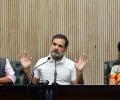
Soon after Gandhi's press conference, the Election Commission said it will respond with full facts in writing.
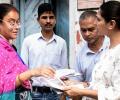
Thousands of West Bengal residents whose names were deleted from electoral rolls are awaiting decisions from tribunals, the final recourse after initial appeals were rejected. The fate of around 2.3 million people hinges on these adjudications, raising concerns about voting rights and citizenship.

'I don't want to be called a new Indian voter when I am an old Indian voter.'
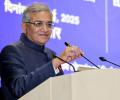
Opposition parties are planning a third attempt to move a motion for the removal of Chief Election Commissioner Gyanesh Kumar in both the Lok Sabha and Rajya Sabha. This renewed effort follows an Indian Express report highlighting objections from two other Election Commissioners regarding decisions made without their knowledge, particularly concerning voter registration and electoral roll management.
The Supreme Court declined to initiate an inquiry into alleged voter roll irregularities in West Bengal, stating it would amount to a 'fishing inquiry'. The court's decision came after concerns were raised about the addition of a significant number of voters ahead of the state's Assembly elections.

Opposition parties in India are demanding the impeachment and arrest of Chief Election Commissioner (CEC) Gyanesh Kumar, alleging he is running the poll panel as a 'one-man autocracy' following revelations that two Election Commissioners red-flagged issues related to the Special Intensive Revision (SIR) of electoral rolls.
The Supreme Court has begun hearing petitions challenging the Election Commission's decision to conduct a special intensive revision exercise in Bihar ahead of elections, raising concerns about voter exclusion.

From meme-worthy poster carrying youngsters to an E20 petrol hater to the disenfranchised and youth with spine, the CJP's Shivaji Park rally on Friday saw them all.
